Je vous en fais d’abord lire quelques-unes des siennes, citées par le dernier, à ce qu’il me semble, de ses biographes et éditeur, Duncan Wu [1] :
A new sense comes upon me, as in a dream ; a richer perfume, brighter colours start out ; my eyes dazzle ; my heart heaves with its new load of bliss, and I am a child again. My sensations are all glossy, spruce, voluptuous, and fine : they wear a candied coat, and are in holiday trim. I see the beds of larkspur with purple eyes ; tall holly-oaks, red and yellow ; the broad sun-flowers, caked in gold, with bees buzzing round them ; wilderness of pinks, and hot-glowing pionies ; poppies run to seed ; the sugared lily, and faint mignonette, all ranged in order, and as thick as they can grow ; the box-tree borders ; the gravel walks, the painted alcove, the confectionary, the clotted cream :—I think I see them now with sparkling looks ; or have they vanished while I have been writing this description of them ? No matter ; they will return again when I least think of them.
En voilà un autre pour qui écrire et vivre sont le même évidemment ; et ce beau passage est si bien traduit par Denis Bonnecase [2] qu’il le demeure en français.
Notes
[1] Duncan Wu, William Hazlitt, the first modern man, Oxford University Press, 2008 ; The Selected Writings of William Hazlitt, Routledge 1998, VI, p. 229 “Why Distant Objects Please” tiré de Table-Talk, essays on Men and Manners, volume 2, John Warren 1822.
[2] William Hazlitt, Sur l’amour de la vie et autres essais, traduits, annotés et présentés par Denis Bonnecase, éditions du Sandre 2018.
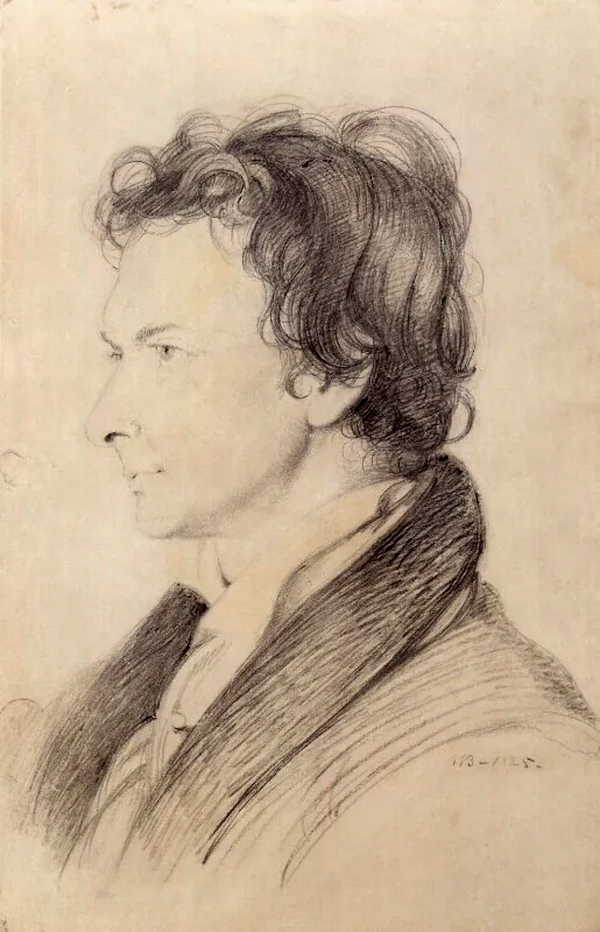
Image : Portrait de William Hazlitt par William Bewick, National Portrait Gallery, Londres.
article précédent : Une promenade en l’air